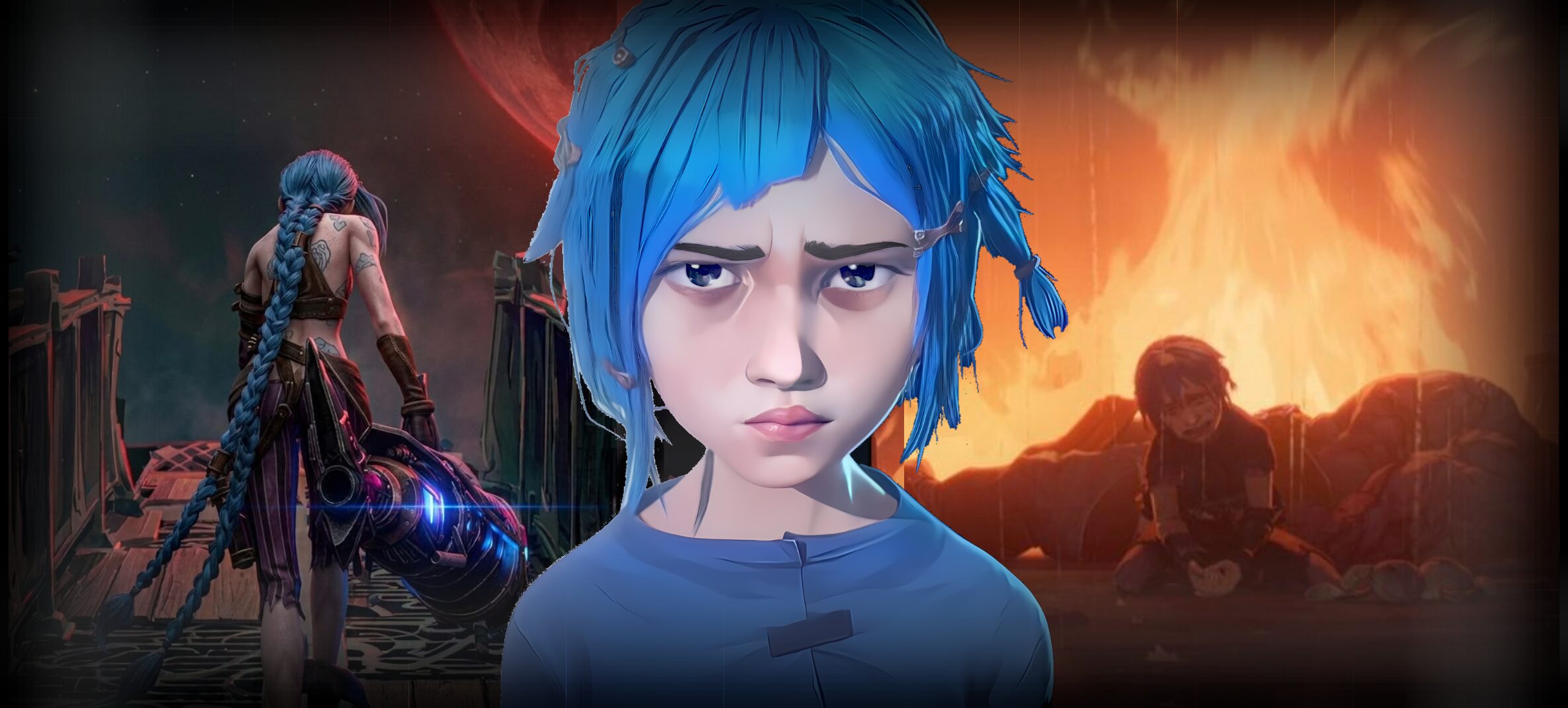
This is part 1 of the Arcane blog series.
We all experience trauma in life, whether in the form of physical scars or emotional scars. This trauma can shake the foundation of who we are. Trauma can also make us question the solid ground of what we hold dear. We may (1) question God, (2) struggle to make sense of suffering, or (3) be unable to discover our life’s purpose. We may be unsure of how to address these issues. Yet, the good news is that these issues have already been addressed. There are solutions to these problems. There are answers to our traumas in life. The question we are to ask is how we can make an active effort to find those solutions.
I say all this not in clinical terms. It goes without saying that the answer to solving clinical depression, PTSD, and other issues is in the hands of licensed professionals. Those are more serious traumas that I, for one, cannot advise. But we all indeed have scars in some shape or form. They could be closed scars of our past. Or open scars of our current dilemmas. They could be minor scars that annoy us. Or they could be major scars that will haunt us. Scripture gives us good news of these scars… It teaches us that our faith in God exists to support us rather than burden us. That’s not to make light of our commitments to God. Nor is it to excuse sin. Far from it. But we can know that God has compassion for us just as we show compassion to others.. God is not the one crucifying us. God is the one who takes the weight of the world and puts it on Himself. When we are weak, He is strong. When we search through empty questions, God holds out gentle answers. When we cry out for forgiveness, He’s the first one to embrace us. When the world curses us, God blesses us. This is the good news given to us by God. Yes, we all experience trauma in some shape or form. But God is the one who understands the trauma. God transforms the trauma from worthless pain to a beautiful opportunity. The pain and filth of the world can be transformed into something positive and powerful – all by God’s strength. Don’t fret. God is on our side.
Let me tell you a story: There’s a tragic tale of a single city fractured by class, geography, and exploitation. It was a city governed by seven appointed (not elected) oligarchs who were more concerned with one side of the city than the other. There existed two classes that were opposites of the same society. One was called Piltover. This part of the city was noted as the “city of progress.” It was also coined the name “topside.” The other was Zaun, which was termed the “undercity.” Zaun is where poverty, crime, and drugs flourish. One society prospers with wealth and expansion. The other prospers with poverty and suppression. The people of Piltover would pass laws to build up Piltover. The people of Zaun were set aside and forgotten. Thus, the people of Zaun desired independence from Piltover. The people of Zaun wanted the opportunity to build a government that addressed their own problems. They despised a council that intentionally turned a blind eye. Nonetheless, the council considered it madness to lessen their control over Zaun.
The people of Zaun would eventually lose patience with Piltover’s council. They had had enough of the neglect. As a result, the people of Zaun held a massive protest at the gates of Piltover. It served as a blockade to the city. Of course, the council didn’t like this… The city’s enforcers (the police force of Piltover) set a trap for the protestors. Once the protestors gathered (and tightly compacted) onto a small bridge, the enforcers opened fire. This transformed the protest into a violent riot. The protestors attempted to storm the city by force but were unable… The result was a horrific massacre by the enforcers. This left a massive scar and a deep fear for the people of Zaun. They would never again protest against the council’s decisions…
Dear friend across the river,
My hands are cold and bare.
Dear friend across the river,
I’ll take what you can spare.
Amongst the smoke of the massacre are our two protagonists – Violet and Powder. Violet (also called Vi) is the older sister and main caregiver of her younger sister, Powder. Both were born in the slums of Zaun. Both were forced to see the devastation of war. The parents of Vi and Powder took part in a large protest at the gates of Piltover. Once the protest became violent, the parents had nowhere to escape. Both the mother and father died in the riot. Vi and Powder became orphans on that day. Vi discovered her mother’s body as she walked through the remnants of the ruins. Powder stood beside her. Yet, Powder was too young to understand what had just taken place. The loss of their parents forced Vi to support her sister, Powder. Such a learning experience forced Vi to develop a sense of independence and survivability. It also led her to develop strong confidence.
I can hear the sound of a heartbeat before it goes out,
Won’t ever leave my memory of bloodshed all around.
Our story begins with a five-year time jump. Powder is now twelve years old. Vi is now eighteen years old. Our protagonists’ two stepbrothers, Mylo and Claggor, joined in the mission. They crossed into Piltover and gained access to the apartment of a major scientist (who was appointed later to Piltover’s council). Yet, the mission didn’t go as planned. An explosion occurred during the raid. It forced our protagonists to escape the scene (We would later learn it was Powder who had made a mistake and accidentally set off a bomb). The theft made major news and was considered a high-profile case. The full force of the Piltover enforcers started looking for the culprits.
Vi knew Powder had messed up. Nonetheless, Vi decided to comfort her younger sister for the mistake.
Overcoming her traumas made Violet into a leader and a fighter. Others followed her command. But Powder was different… Powder was a twelve-year-old girl who was born with multiple mental health ailments. Fans are never told of these ailments, but it’s apparent nonetheless. Her extreme emotional vulnerability would lead her to develop a significant mental health ailment called Separation Anxiety Disorder. It’s a condition that is found especially in young children. The child experiences extreme anxiety whenever the primary caregiver isn’t present. In this case, the primary caregiver is Vi. Furthermore, fans believe Powder has a very lengthy list of other potential mental ailments. This list includes: Rejection Sensitive Dysphoria (RSD), Complex Post-Traumatic Stress Disorder (C-PTSD), regular Post-Traumatic Stress Disorder (due to a specific event we will later learn), Borderline Personality Disorder (BPD), Separation Anxiety Disorder, Acute Stress Disorder, extreme codependency, and extreme anxiety episodes. Some hinted she may have schizophrenia (hearing the voices of her dead stepbrothers), but this could be related to PTSD. Not schizophrenia. Nonetheless, all of these ailments centered around the one significantly painful symptom that would haunt Powder for the rest of her life. It would dictate every decision she was to ever make:
A deep fear of abandonment.
At this point in the story, our protagonists are being pursued by the full force of the police. Powder’s mistake had triggered an all-out effort to find the culprits. Vi is aware of this… She makes a difficult decision for the sake of her family. Vi decides to turn herself in to the police. In these circumstances, Vi’s arrest would stop their search for our other protagonists. In other words, Vi’s decision to turn herself in would keep the others safe.
Vi visits Powder one last time before turning herself in…
Woe to those who call evil good, and good evil;
~ Isaiah 5:20
Who put darkness for light, and light for darkness;
Who put bitter for sweet, and sweet for bitter!
The definition of ambiguity is a quality to be interpreted in more than one way. This show applies moral ambiguity in many ways. It creates conflict within yourself and makes you ask, “Is this the right direction?” It leaves an audience scrambling for answers. It causes debates and struggles with inner reflection. To write about moral ambiguity is to tread on a careful path – especially for a Christian audience. This is a reason why I watched this show with a careful eye. Therefore, let us acknowledge that there is no moral ambiguity in regard to God’s word. Truth has no agenda. It’s never changed and never will.
Vi prepared herself for her arrest. The local sheriff heard of the news amongst the community that Vi was willing to turn herself in. Yet, an unexpected bribe made things change for the worse…
Vi’s adopted father, Vander, also heard the gossip. The father found a way to turn himself in and, thus, spared Vi’s freedom. But there was an unexpected turn. We learn that the show’s main antagonist (a criminal named Silco – not associated with law enforcement) also heard the news. Silco made a bribe with the local law enforcement and took Vi’s adopted father captive. Not only was there no arrest, but Vi’s adopted father was now held captive with the show’s main antagonist. Vi met with her brothers to fight and free their father, but they’re about to run into an intentional trap…
It goes without saying that the Netflix series called Arcane has secular material that doesn’t align with the teachings of Christ. Nonetheless, it is true to say, “You can’t give an answer without being asked the question.” We can’t give a response to a secular world if we refuse to understand (and validate) their experience. That’s not to say “to approve.” It means to acknowledge that it exists for a reason – whether good or evil. Understanding where beliefs come from allows us to respond appropriately.
The Netflix series called Arcane has a fanbase that varies widely in their criticism of the show. One side calls it a masterpiece. The other side calls it a disgrace. The one reason for this wide range of criticism is this: the teaching of life’s nuances. Many novel stories have a defined good guy and bad guy. Arcane is different… Evil people can have some good inside them. And good people have the potential to do evil things. I find this theme intriguing. I applauded the show’s writers for taking on the subject of mental illness. But if you take on that subject, you’d better get it right… They didn’t get it right. After watching the end of the show, I wanted to slap the show’s writers in the face. Alas, I refrain from physical violence. So I will resort to a “figurative slap to the face.” The show’s ending promotes stereotypes and invalidation. Such reminds me of Isaiah 5:20, “Woe unto them that call evil good and good evil, that put darkness for light, and light for darkness that put bitter for sweet for bitter.” With all this said, I find it ironic that the show’s writers address the ‘nuances of life,’ yet their fans’ opinions can’t be more opposite. Let it be said: there is such a thing as good and evil. My opinion on Arcane is this… The show began well. The show set itself up for a magnificent ending. Then, the show folded.
Powder’s attempt to save her family ends in tragedy. And the unfortunate outcome is due to her own efforts. She uses a bomb to kill the person trying to kill her family. Yet, the bomb is stronger than she expected. The explosion kills her family. The lone survivor is Vi – her older sister. In the next blog of this series, we will learn that this traumatic event changes Powder’s identity. She is no longer the “sweet, innocent child” named Powder. She conforms to what others say she is. Thus, “trauma has killed Powder’s innocence…” She is abandoned. The lone rescuer who is willing to pick her up is none other than our main antagonist, Silco.
I can see a tear in my father’s face before it falls out.
Oh, my enemy, how could I have ever let you down?
Where is my home?
I don’t recognize the faces anymore.
Where is my friend?
The one I’ve known since I was a kid.
Copyright Disclaimer: This blog post features short, heavily edited video excerpts for the purposes of criticism, commentary, and analysis. Such use falls under the protections of Fair Use. Every effort has been made to use only the minimum amount of material necessary to support the commentary. To view the original series in its entirety, please visit Netflix.