This blog is the 3rd blog of the Arcane series. You can start the Arcane blog series here.
Disclaimer: This blog involves a story that includes self-harm & suicidal ideation. Discretion is advised. Read at your own pace.
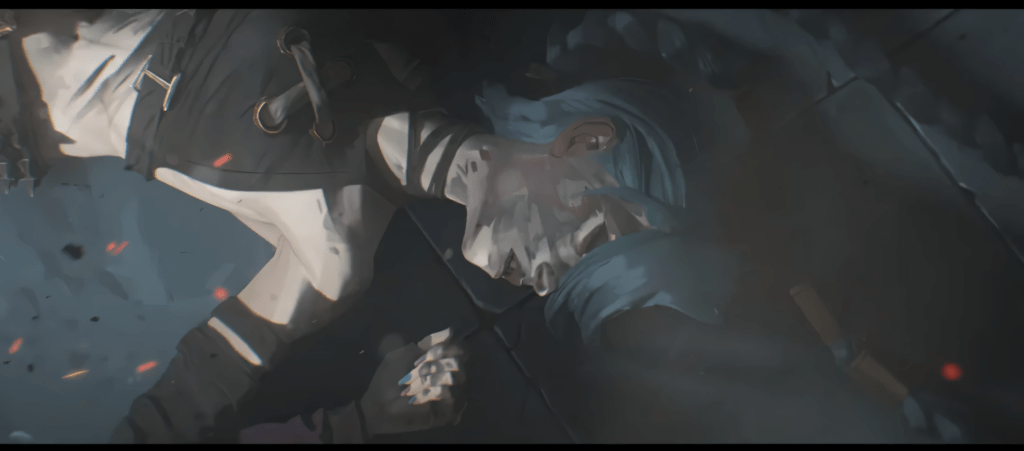
Our last blog ended with Jinx attempting suicide. She’s alive but in critical condition. Her surrogate father (named Silco) finds her unconscious and immediately takes her to an underground doctor. The doctor prepares for emergency surgery.
I am your ghost, your fallen angel.
You ripped out all of my parts.
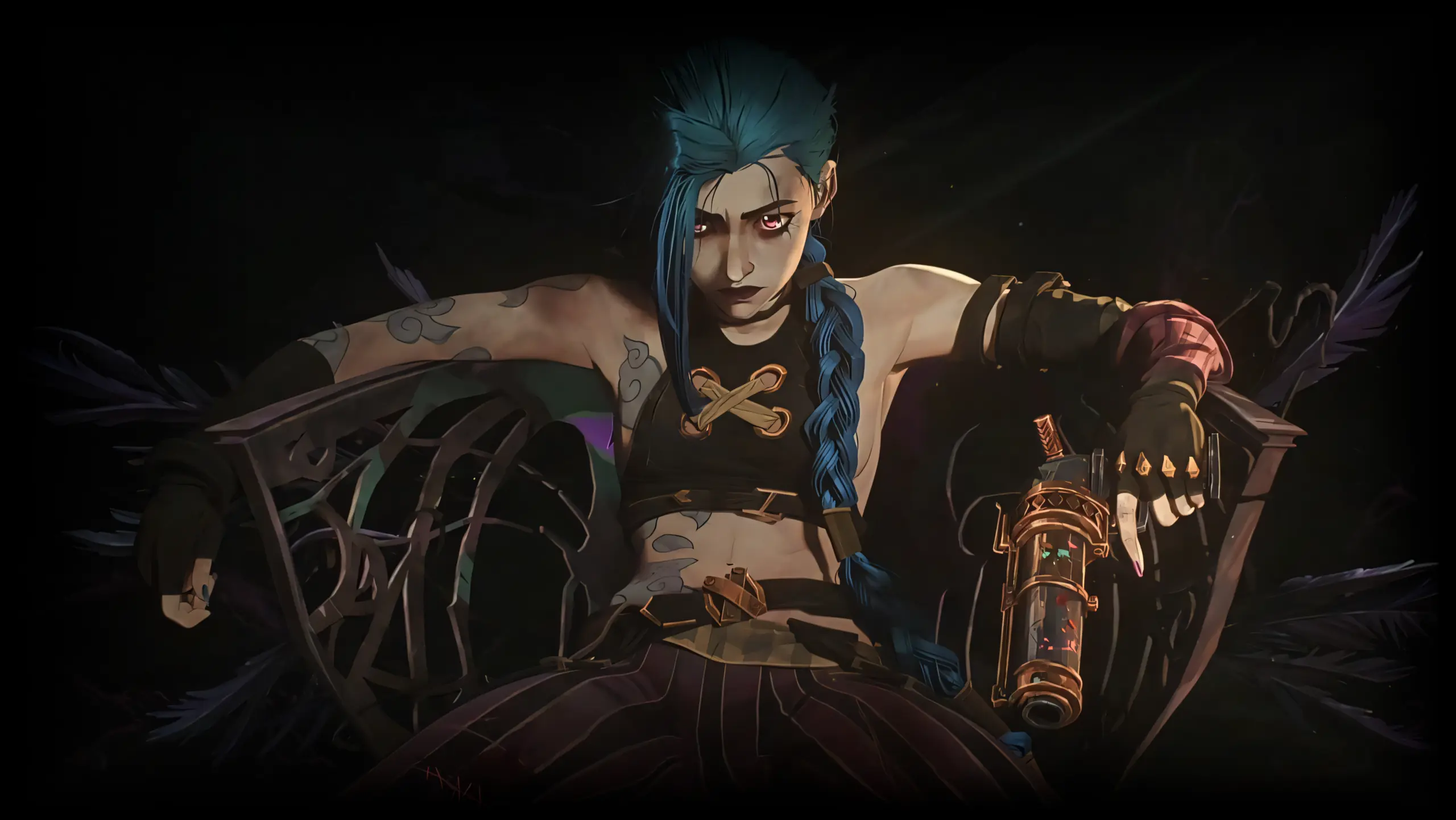
Jinx was raised in the harsh, dark, cannibalistic slums of the undercity. The undercity’s lack of sun made Jinx develop pale skin. The only “supportive” relationship she had was a toxic relationship with her surrogate father (Silco). The manipulation, lack of support, and severity of mistrust only compounded her already-troubling mental health symptoms. It further intensified her struggle with self-harm and suicidal ideation.
There are various types of phobias: Fear of heights. Fear of flying. Fear of spiders. Fear of snakes. Fear of close quarters. On and on… It’s a type of fear we seem to be born with. It’s characterized by a lack of control and uneasiness. It’s being covered in spiders. It’s being surrounded by snakes. It’s being unable to move in a crawl space… Let me remind you of Jinx’s greatest “phobia.” It’s characteristic of her BPD symptom:
The Fear of Abandonment.
Jinx undergoes emergency surgery. There is no anesthesia. There is no sedative. The underground doctor straps her to a table and resorts to a street drug that causes Jinx to hallucinate. These hallucinations reflect her greatest fear… The fear of abandonment.
I am the monster you created,
You ripped out all of my parts.And worst of all, For me to live,
I have to kill the part of me that saw,
When I needed you more.
Jinx has no peace. Jinx has no light. Jinx has no solution for her mental ailments. The writers intended Jinx to be society’s depiction of mental illness – and then show us the reality of what’s happening inside of her. We see Jinx’s intimate thoughts and feelings. Yes, we see the chaotic behavior. But with Jinx, we also see the drawings behind the behavior. It’s safe to say that Jinx has been through a lot. Her parents were dead. Her sister had abandoned her. The only relationship with her sister is a fantasy. And she is raised by her surrogate father, Silco – only to be blamed for his crimes.
Jinx went missing after the surgery. We won’t hear from her again until the last scene.
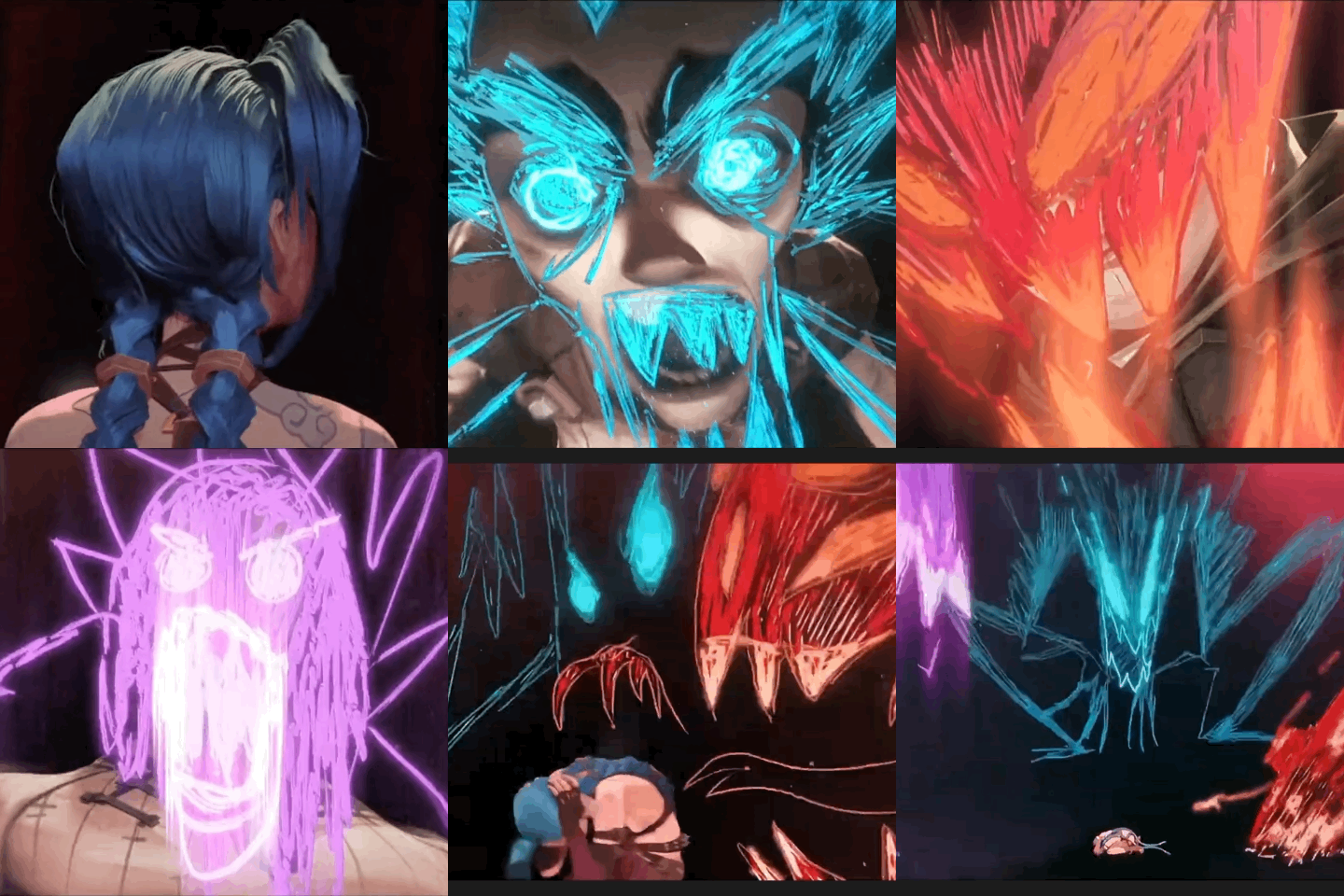
The Netflix series called Arcane had such great potential. If done right, it could’ve bridged the gap between society and mental health awareness. As a writer, I acknowledge the show’s artistic charm. The idea to use an animated series in displaying inner experiences is a brilliant idea for two reasons: (1) The nature of an animated show is to emphasize (or perhaps even overemphasize) emotions. It’s putting a magnifying glass on a character’s behavior. When someone is “lively” or “bubbly,” they can also be called “animated.” Jinx’s experience takes this further. We observe the animated behavior, but we also see what causes the behavior. We get an intimate glimpse of the voices, the scribbles, and the sights behind her behavior. In addition, (2) the visual graphics make these inner motives clear. In such a case, we see colors assigned to each character: light blue for Mylo (her deceased brother), red for Claggor (her other deceased brother), and purple for Vander (her deceased adoptive father). This allows for full clarification. Symbolism is properly displayed. Emotions are understood. The chaotic behavior outside of Jinx is the same chaos happening inside of Jinx. She is left confused, broken, and alone in her trials. And us as the audience can begin to understand her dilemma.
This is the entire purpose of Jinx’s story: We see the behavior. Then we see the internal experiences behind the behavior. A perfect example is her memories of her childhood family. Society assumes childhood memories are to be cherished. But this isn’t the case for Jinx. Remember: Her family’s death was by her own hand. So when her previous family comes to the forefront, Jinx tries to block them out. She puts masks over faces, scribbles over emotions, and fissures over memories.
The masks and scribbles resemble a child’s drawing. This could hint that the innocent “Powder-version” of Jinx is still inside her – covered by life’s burdens. Yes, she’s an adult now. But may we recognize that there was a time when Jinx was an innocent child who had lost her parents. With that said, she chooses to block out those memories. The last time she saw her childhood family was immediately after she accidentally killed them. They resembled pale corpses and disfigured creatures. This explains why Jinx blocks her childhood memories. It’s the same reason why a person with PTSD wants to avoid their childhood trauma.
To put it briefly: The Netflix series called Arcane had a significant opportunity to bridge the gap between society and mental health awareness. It could’ve broken stereotypes. It could’ve shown that ALL people can show compassion – regardless of ethnicity, social class, or personal beliefs. Just because we don’t understand another’s experience doesn’t mean we can’t show them compassion. Not understanding others doesn’t mean we can’t cultivate a desire to understand them. I expected this message. Would I travel the same road as the writers? No, I wouldn’t. As mentioned in our previous blogs, the Netflix series (called Arcane) is a secular show. It has no religious context. The intent isn’t to argue religious principles. It’s meant as an entertainment show with a side of symbolism and curiosity. Religion isn’t involved whatsoever. Nonetheless, the show has occasional teaching points that we as Christians can apply to our faith. We can know that ALL people have an opportunity to show compassion for others – even if we don’t understand them.
Yes, the show’s vulgar language, violence, promotion of homosexual relationships, and sexual innuendo don’t align with Christian beliefs. In this case, I’ll stick with my principles. I’ll most definitely take a different road. It wasn’t until the end of season two that I saw their true colors. Their message would be the opposite of what I expected. It would promote stereotypes and downplay mental health. Such a message is damaging to society. It’s especially damaging to the mental health community. And as I said before: If you want to address mental illness, then you better get it right… They didn’t get it right. I made this blog series to correct what they got wrong. On a positive note, it allows me to speak the truth.
There are such things as universal truths. Helping a vulnerable, innocent person is good. Hurting a vulnerable, innocent person is evil. We don’t need complicated formulas to figure this out. It’s obvious. It’s universal. There is no nuance.
With that said, I wish to exhibit my disgust towards the show’s writers. I patiently tolerated all they wrote up to the end of season two. In baseball terms, I assumed they were intentionally loading up the bases. It’s the bottom of the ninth. Your team is down by three. The bases are loaded. Full count—three balls, two strikes. You’re at the plate. The greatest defense in baseball is standing between you and the outfield fence. You need a walk-off grand slam. Everything is set for a legendary ending. And… the writers bunted. Game over.
The ending of season two made me want to walk up to the show’s writers and give them a well-deserved Will Smith-style slap in the face. (without the controversy, lol)
Jinx has made it clear that she wants to be her childlike self. This is exactly why she wants Vi’s affection. No one else has ever shown her such compassion. Not her surrogate father. Not the others around her. She’s only experienced manipulation and betrayal.
This is Jinx’s dilemma: Does her identity belong to “Powder?” Or does it belong to “Jinx?” Is she the innocent child her sister Vi admires? Or is she the narrator’s villain?
Jinx desperately wants to be her childhood self. This is why I get angry when the other characters say, “Jinx will never change. She is flawed; she is hopeless.” With that said, who do they want her to be? They define her and put her in a cage. Jinx serves as a scapegoat. At this point, I applaud the show’s writers for writing this narrative. This is a reflection of how our society views mentally ill individuals. This is a good opportunity in the story where the characters conclude that Jinx isn’t hopeless… But the writers don’t push that narrative. They continue to push the narrative of “society views mentally ill individuals as hopeless.” They never challenge that belief. They never offer a solution.
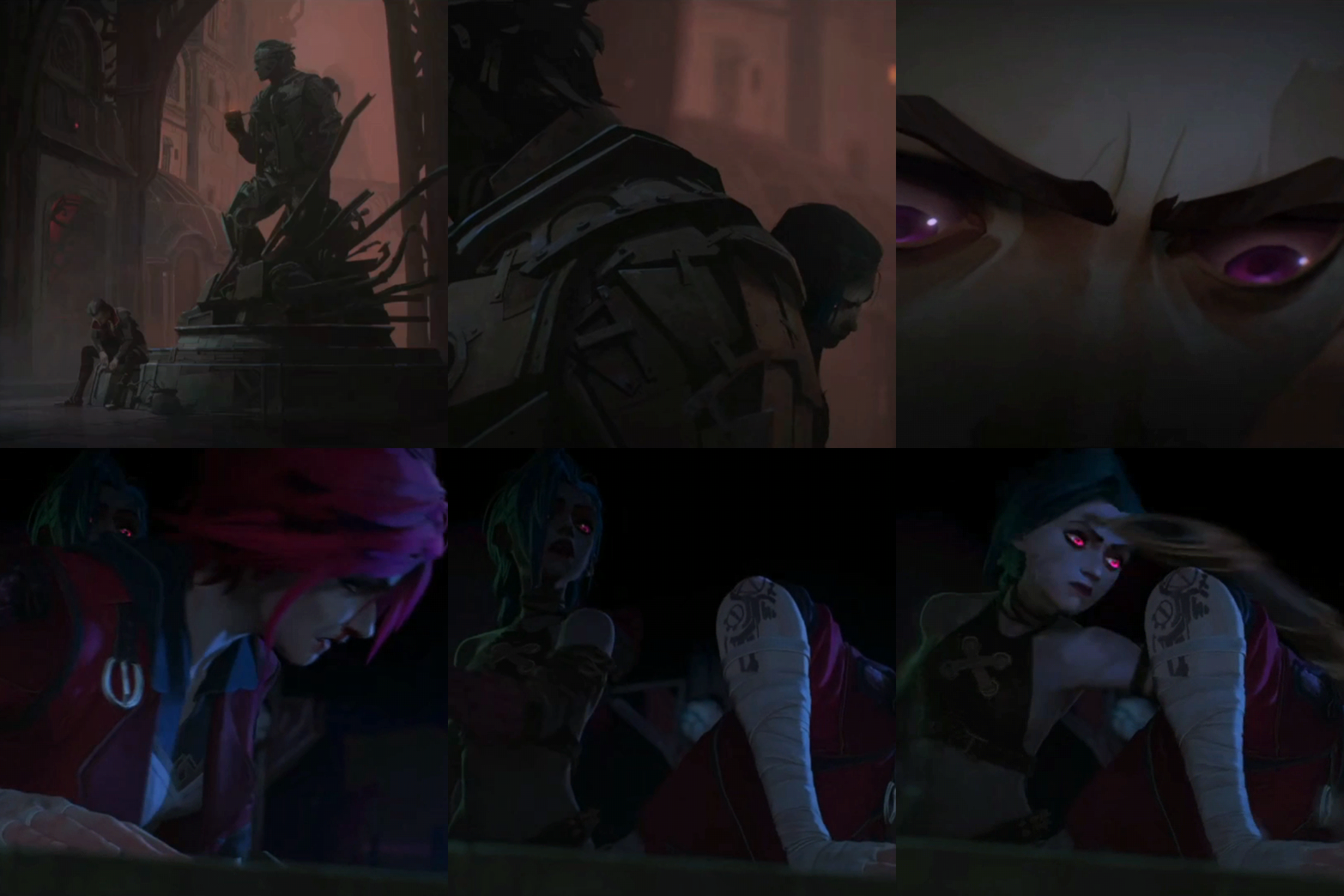
Towards the end of season one, the Piltover counselors give in to the undercity’s demands. The nation of Zaun will finally be independent. All of the riots, bloodshed, and tears have finally paid off. And the leader of this new nation will be none other than Silco (Jinx’s father). But there’s one significant prerequisite: Silco must sell out his daughter to the Piltover council. At best, Jinx will be incarcerated for life. At worst, she will be put to death. Jinx would take the blame for all of Silco’s crimes. Jinx would serve as a scapegoat once again. Elsewhere in the city, Vi is on her own mission. Neither Silco nor Vi realize Jinx is hiding in their shadows. Jinx knocks out both Silco and Vi to (ironically) bring them both to the same table for what fans have called “Jinx’s tea party.” It’s the last scene of season one. So in the end, who is Jinx? Is she the innocent child whom she always desired to be? Or is she forced to be the villain?
Here’s my take: We aren’t defined by a label. We don’t need society to tell us who we are. If we let the world define us, then we become a tree that’s a victim of the wind. We bend wherever the wind blows. One day, we might be enough. The next day, we are ostracized. This is why the whole purpose of the Millennial Spark ministry is to empower you, the individual. You don’t need people to tell you who you are if you already know. And I don’t say that in clinical terms… The best I can say is, “be at peace.” It’s good to strive for success. It’s good to please people. But know that God’s word is a firm foundation. You’re not the name people give you. And so if I could give some advice to Jinx, I would tell her to choose a third name and stick with it. Perhaps it’s your mother’s name. But the lesson is that you choose your name. And let that stay with you no matter what the circumstances.
I want you to hurt like you hurt me today,
I want you to lose like I lose when I play,
“What Could’ve Been”
I’m unable to provide the ending video of season one due to copyright restrictions. However, the following video is from a source that is allowed to show the end of season one. If you would like to see the ending of season one, then watch here:
Copyright Disclaimer: This blog post features short, heavily edited video excerpts for the purposes of criticism, commentary, and analysis. Such use falls under the protections of Fair Use. Every effort has been made to use only the minimum amount of material necessary to support the commentary. To view the original series in its entirety, please visit Netflix.